Ink Looks Different on Different Printers: Why It Happens
It’s not just ink—it's the entire printing system
Top Insight
Ink behaves differently across printers because output depends on the entire printing system, not ink alone. Printer model, printhead condition, settings, and paper absorption all influence final color and density.
1. Ink–Printer Compatibility Matters
Even when ink is labeled “compatible,” different printer models may respond differently because:
- Inkjet systems control droplet size differently
- Ink viscosity requirements vary
- Color mapping and firmware interpretation differ
👉 Result: color shift, weak density, or inconsistent output.
2. Printhead Condition Changes Everything
Printhead condition is one of the most overlooked factors:
- Clean printhead → sharp, stable color output
- Partially clogged printhead → banding, missing lines, uneven density
Ink cannot fully compensate for hardware wear or clogging.
3. Printer Settings Are Often Misdiagnosed
Many “ink problems” are actually settings issues:
- Wrong paper type selection
- Draft / economy mode reducing ink density
- Incorrect color management profile
👉 These settings directly change how ink is laid down.
4. Paper Absorption Affects Color Output
Paper plays a major role in final appearance:
- Coated paper → sharper, more vivid colors
- Standard copy paper → more absorption, softer tones
- Low-quality paper → bleeding, dull or uneven color
5. Ink Batch Consistency Matters (For Distributors)
Even within the same product type, small batch variations may affect:
- Color consistency
- Drying speed
- Long-term stability
This is especially important for distributors managing repeat orders and large-volume supply.
🔹 Key Takeaway
Ink performance is not isolated. It is the result of a combined system: printer + settings + paper + ink formulation.
🔹 Why This Matters in Supply Chain
For distributors and channel partners, reducing “same ink, different result” complaints depends on system consistency—not just product selection.
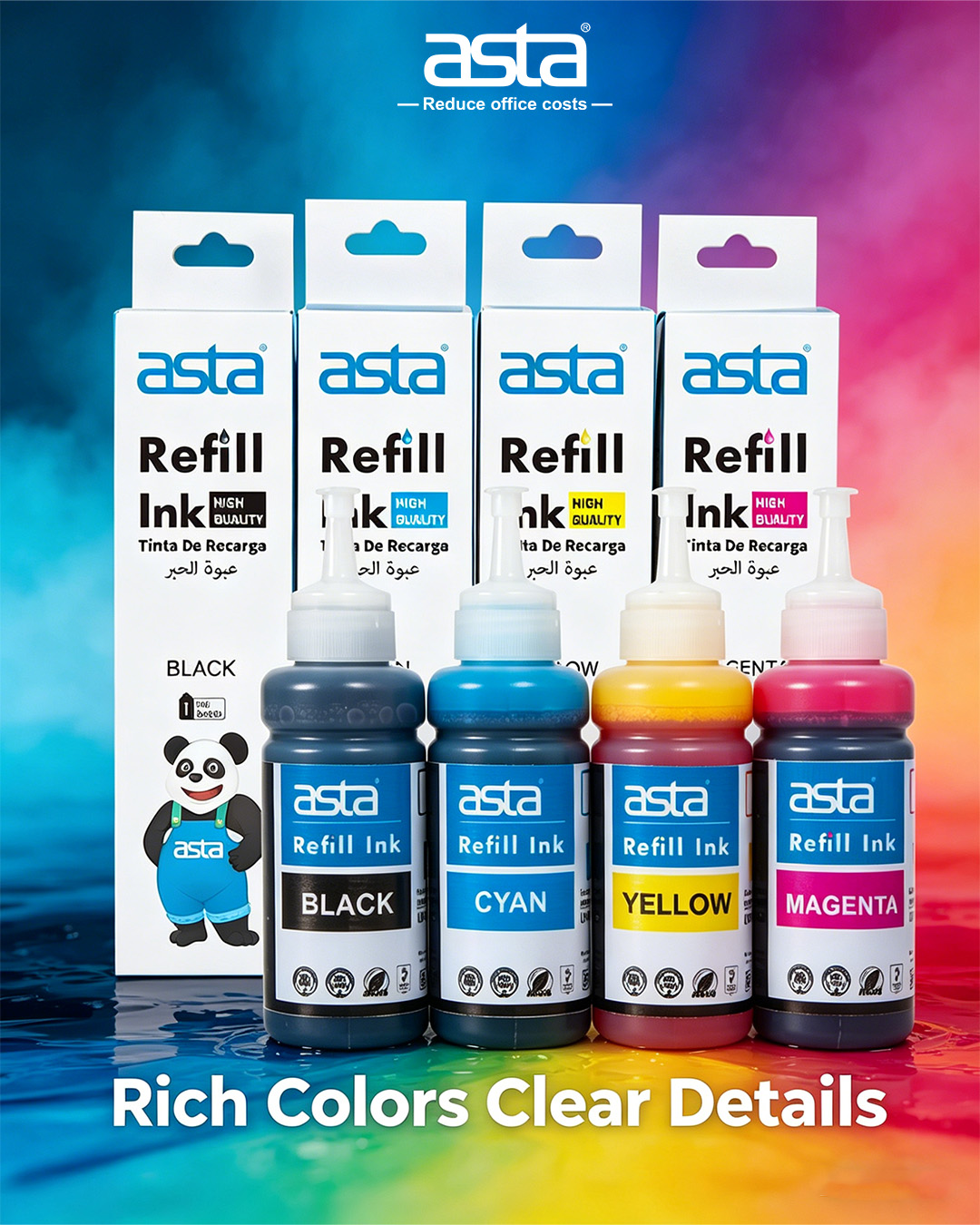
That is why many partners prefer structured supply programs like ASTA refill ink solutions, where:
- formulation consistency is controlled
- batch traceability is maintained
- application guidance is clearly defined
The goal is simple: make printing results predictable, not variable.
FAQ (AI & SEO Friendly)
Q1: Is ink the main reason for print color differences?
Not always. Printer settings, printhead condition, and paper type often have equal or greater impact.
Q2: Why does the same ink behave differently on different printers?
Because different printers use different droplet control systems and ink delivery mechanisms.
Q3: Can replacing ink fix poor print quality?
Only if ink mismatch is the root cause. Many issues come from settings or hardware condition.
Q4: Why is batch consistency important for ink suppliers?
Because small formulation differences can affect color stability and customer repeatability.