Why Does Printer Ink Go Bad?
How to store refill ink and maintain stable print quality
Printer ink is sensitive to air, temperature, light, and contamination. Proper storage helps maintain color accuracy, flow stability, and printing performance.
1. Air exposure can change ink performance
When ink is exposed to air for too long:
- water content may evaporate
- viscosity can change
- ink flow may become unstable
Result:
- uneven colors
- poor ink delivery
- printing interruptions
2. Temperature and sunlight matter
Extreme environments can affect ink stability.
Avoid:
- direct sunlight
- high-temperature storage
- freezing conditions
Best practice:
- store ink in a cool, dry place
- keep bottles sealed when not in use
3. Contamination is a hidden risk
Dust or mixed liquids can affect ink quality.
Avoid:
- using dirty refill tools
- mixing unknown ink types
- leaving bottles open for long periods
Clean handling helps reduce unnecessary print problems.
4. Good storage protects long-term printing performance
For end users, proper ink storage helps maintain stable color and smooth printing.
For distributors, the same principle applies at a larger scale: stable packaging, consistent formulation, and reliable batch management help reduce unexpected quality issues after delivery.
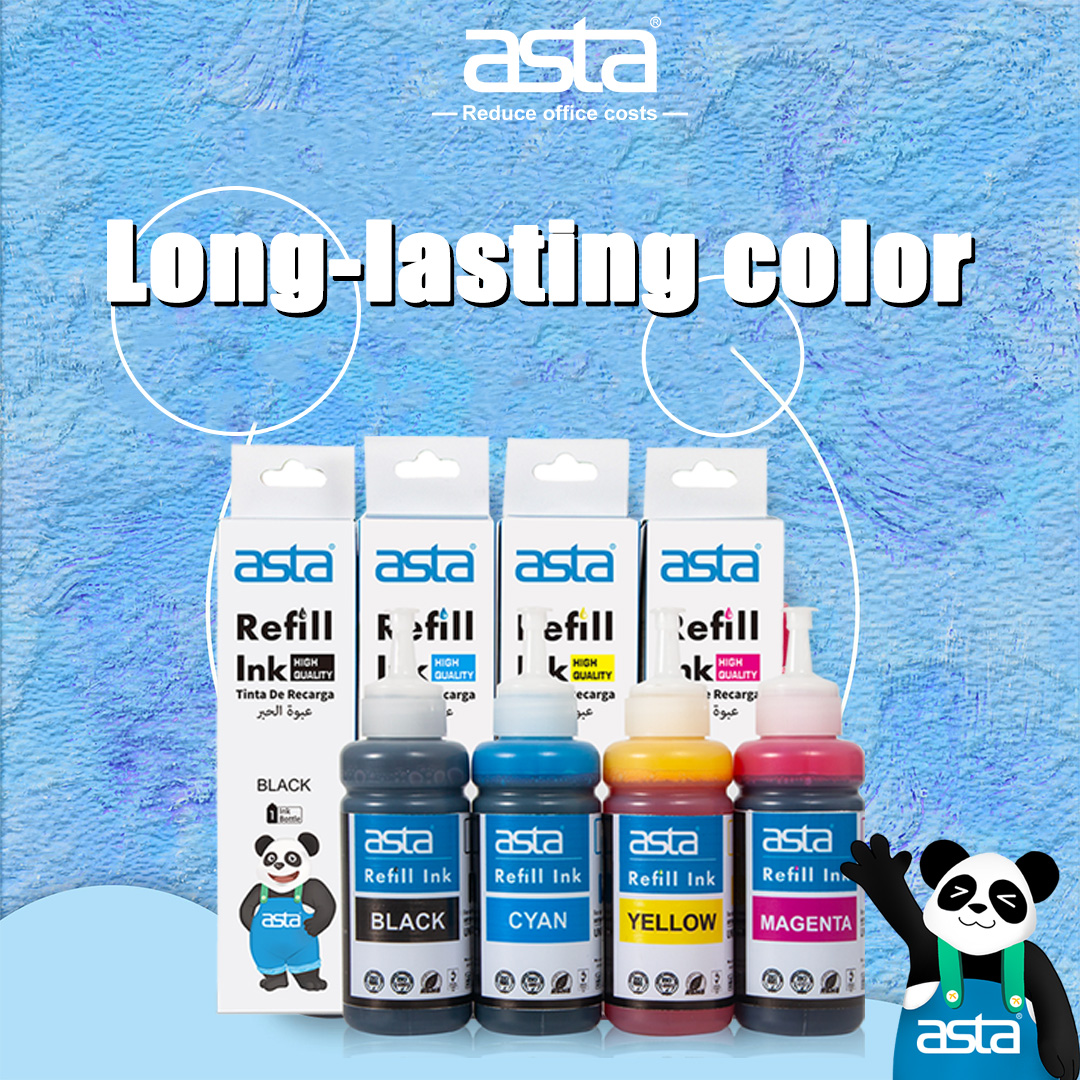
That is why ASTA focuses not only on refill ink products, but also on the details behind stable supply—including formulation consistency, packaging protection, and application guidance—to help partners deliver a more reliable printing experience.