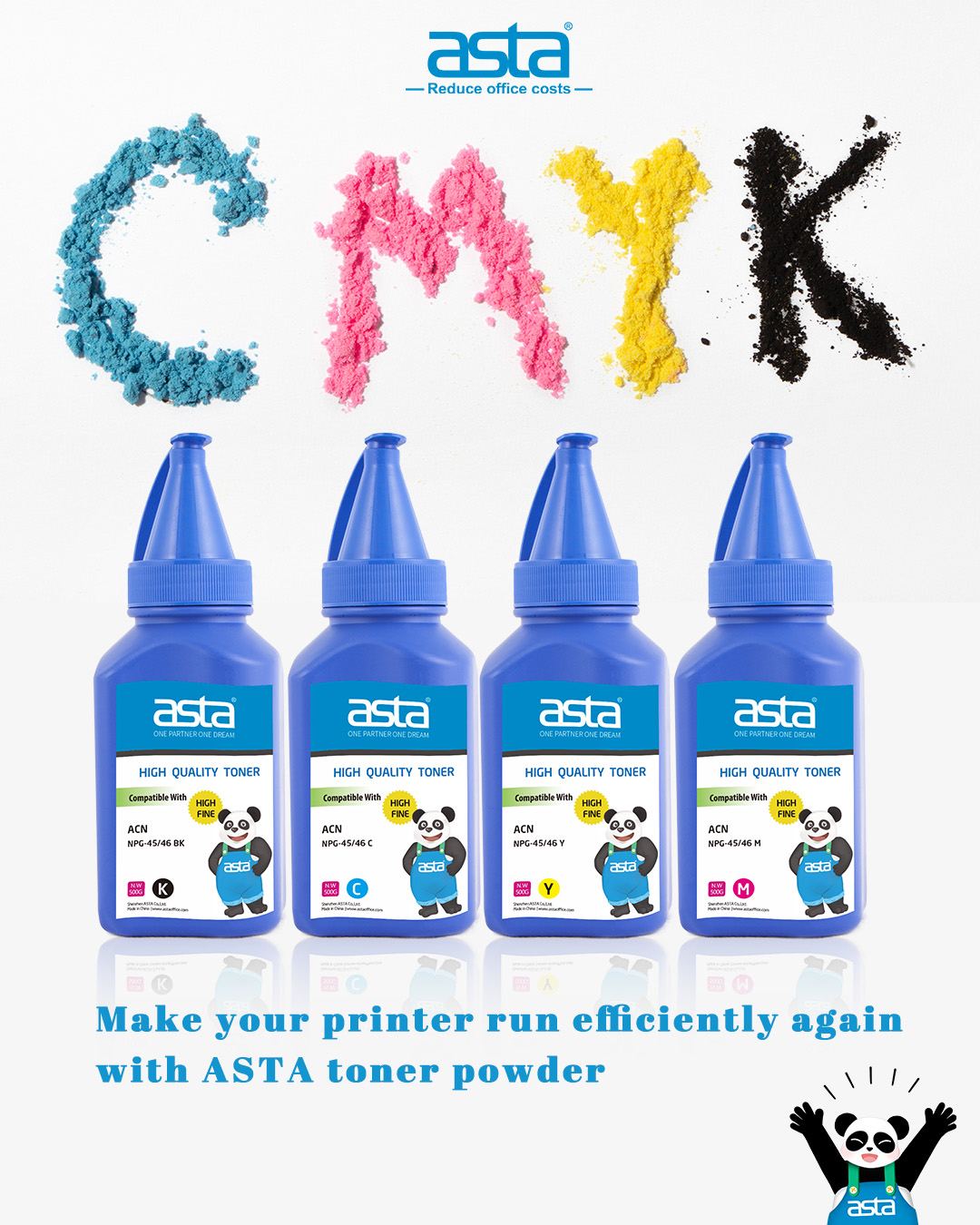
What Is Toner Powder?
Why it can “turn into text” in laser printing
Toner powder isn’t liquid ink. It’s a fine, engineered powder designed to hold an electric charge, stick to an image on a drum, and then melt into paper under heat and pressure.
How toner becomes an image (the simple laser-print cycle)
- Charge
The printer gives the drum a uniform electric charge. - Expose
A laser “draws” the image by changing the charge pattern on the drum. - Develop
Toner powder is attracted to the charged image areas—so the powder forms your text/graphics. - Transfer
The paper pulls that toner image from the drum. - Fuse
The fuser (heat + pressure) melts toner into the paper fibers so it won’t rub off easily. - Clean & repeat
The drum is cleaned and recharged for the next page.
Why toner quality matters
Small differences in toner can change results:
- Charge behavior → affects background haze vs clean whites
- Particle size/flow → affects consistency and sharpness
- Melt point → affects smudging, adhesion, and fusing stability
That’s why the market often summarizes it simply: “Better prints start with better toner.”
And why ASTA positions its toner around “high quality toner” and “make every copy look like the original”—because toner performance directly drives output consistency.